
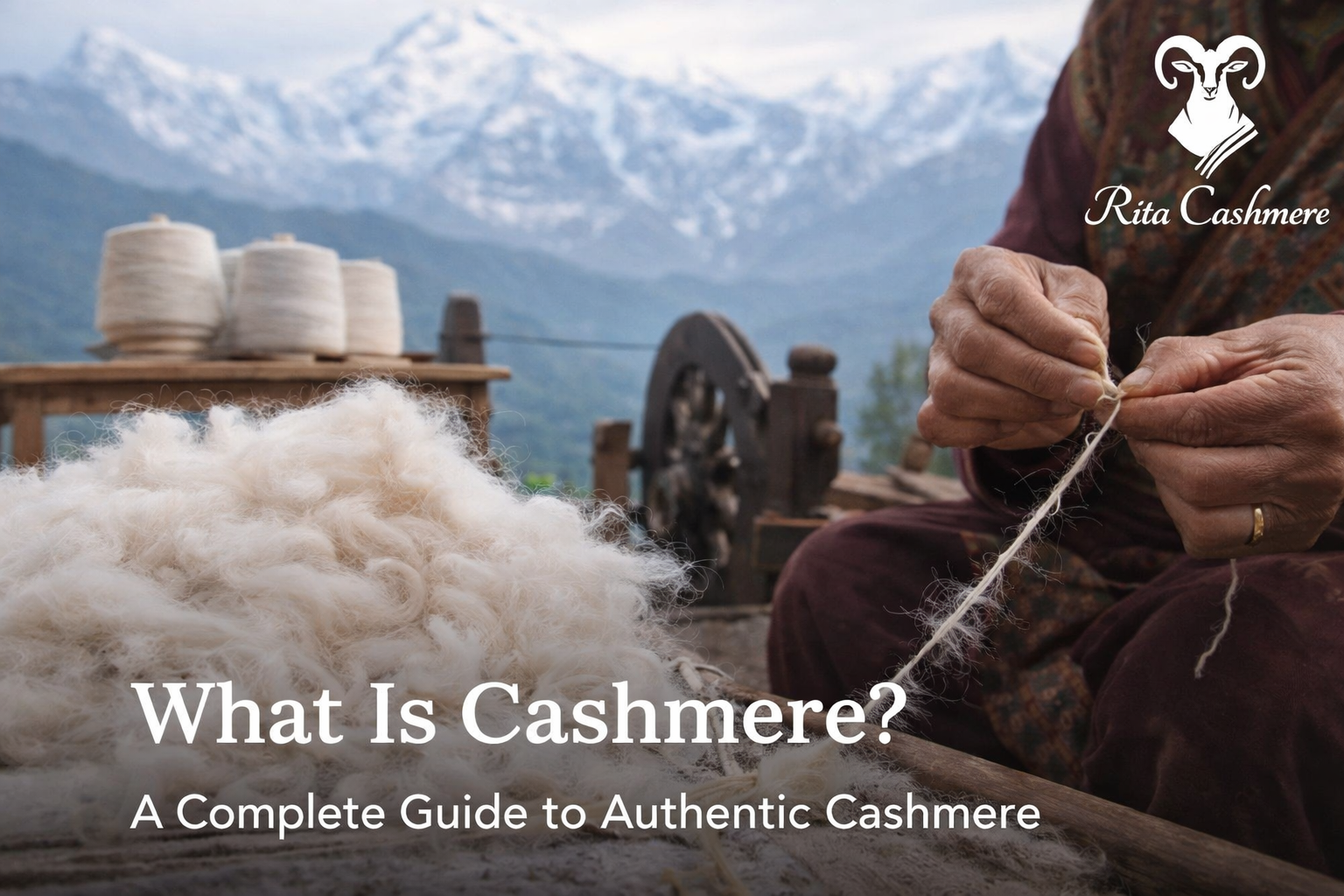
If you’ve ever touched a cashmere sweater and wondered what makes it so incredibly soft—or why it commands such premium prices—you’re not alone. Cashmere has captivated fashion lovers and luxury seekers for centuries, but there’s far more to this remarkable fiber than meets the eye.
At Rita Cashmere, we’ve spent over 13 years manufacturing authentic Nepalese Chyangra Pashmina, and we’re often asked: “What exactly is cashmere, and what makes it so special?” Let’s dive into the fascinating world of this extraordinary natural fiber.
The Origins: Where Does Cashmere Come From?
Here’s something that surprises many people: cashmere doesn’t come from sheep. It comes from goats—specifically, cashmere goats (also called Capra hircus) that live in some of the world’s harshest climates.
The Himalayan Connection
The finest cashmere in the world comes from the Chyangra goats of the Himalayan highlands, particularly in regions of Nepal, Mongolia, and Tibet. These remarkable animals live at elevations between 3,000 to 5,000 meters (roughly 10,000 to 16,000 feet), where temperatures can plummet to -40°C in winter.
Why does altitude matter? The extreme cold forces these goats to develop an incredibly fine, soft undercoat beneath their coarse outer hair. This undercoat—which we call cashmere or pashmina—provides exceptional insulation while remaining remarkably lightweight. It’s nature’s perfect solution to surviving brutal Himalayan winters.
At Rita Cashmere in Kathmandu, we source our fiber exclusively from Nepalese Chyangra goats, ensuring every product carries the proud heritage of authentic Himalayan cashmere.
What Makes Cashmere Different from Regular Wool?
If you’ve ever wondered why cashmere feels so different from your regular wool sweater, the answer lies in the fiber structure itself.
The Science of Softness
Cashmere fibers are exceptionally fine—typically measuring just 15-19 microns in diameter. To put that in perspective:
- Human hair: approximately 75 microns
- Regular sheep’s wool: 25-40 microns
- Premium cashmere: 15-19 microns
- Ultra-fine cashmere: 14-15 microns
Translation? Cashmere is about three times finer than regular wool, which is why it feels so luxuriously soft against your skin. There’s simply no comparison.
Warmth Without Weight
Here’s where cashmere really shines: it’s up to eight times warmer than sheep’s wool while being significantly lighter. The hollow structure of cashmere fibers creates natural insulation that traps warm air efficiently without adding bulk.
This means you can stay beautifully warm in a lightweight cashmere sweater rather than bundling up in heavy layers. Perfect for layering, traveling, or simply enjoying comfortable elegance.
Breathability & Moisture-Wicking
Unlike synthetic materials that trap heat and moisture, cashmere naturally regulates temperature. It keeps you warm in cold weather but breathes when temperatures rise, wicking moisture away from your skin. This makes cashmere comfortable across different seasons—not just winter.
The Cashmere Collection Process: It’s All About Timing
One of the most important things to understand about authentic cashmere is how it’s collected—and this is where ethics really matter.
Natural Shedding Season
Cashmere isn’t sheared like sheep’s wool. Instead, it’s collected during the natural molting season in spring (typically April to June) when Chyangra goats naturally shed their winter undercoat.
Two collection methods exist:
- Combing (Traditional Method): Herders use special combs to gently remove the soft undercoat as it loosens naturally. This is the most ethical, animal-friendly approach and produces the finest quality fibers.
- Shearing: Some producers shear the entire coat, then separate cashmere from coarse guard hairs mechanically. This yields lower quality cashmere mixed with courser fibers.
At Rita Cashmere, we exclusively use combed cashmere from the natural shedding season, ensuring both superior quality and ethical treatment of animals. Our NPIA certification verifies this commitment.
The Yield Reality
Here’s a stunning fact: one Chyangra goat produces only 80-170 grams of usable cashmere per year. That’s about enough for one scarf or one-quarter of a sweater.
This is why authentic cashmere commands premium prices—it’s genuinely rare, labor-intensive to collect, and comes from animals living in remote, challenging environments. When you see “cashmere” products at suspiciously low prices, there’s usually a reason (more on that later).
Not All Cashmere Is Created Equal: Understanding Quality Grades
Just as not all diamonds are flawless, not all cashmere is equally luxurious. Understanding quality grades helps you make informed choices.
Grading Factors
1. Fiber Diameter (Fineness)
- Grade A (Premium): 14-15.5 microns—the softest, most luxurious
- Grade B (Good): 16-17 microns—soft and comfortable
- Grade C (Standard): 17-19 microns—decent quality
- Below 19 microns: Generally not considered true luxury cashmere
Rita Cashmere exclusively manufactures with Grade A Chyangra Pashmina (14-16 microns), certified by the Nepal Pashmina Industries Association (NPIA).
2. Fiber Length Longer fibers (32-36mm or more) produce stronger, more durable fabric that pills less. Shorter fibers create weaker fabric prone to pilling and wear.
3. Color Purity Natural cashmere comes in several colors:
- White/Cream: Rarest and most valuable (easiest to dye)
- Brown/Taupe: Common and beautiful in natural state
- Gray: Natural and increasingly popular
Pure, consistent color indicates quality; uneven, dirty fibers suggest lower grades.
4. Origin Geography matters significantly:
- Himalayan cashmere (Nepal, Tibet, parts of India): Finest quality due to extreme altitude and cold
- Mongolian cashmere: Excellent quality, slightly different characteristics
- Chinese cashmere: Variable quality depending on region and producer
- Other origins: Often lower quality or blended
Chyangra Pashmina: The Nepalese Gold Standard
When we talk about the absolute finest cashmere in the world, we’re talking about Chyangra Pashmina from Nepal.
What Makes Chyangra Pashmina Special?
1. Extreme Altitude Origins Nepalese Chyangra goats live at the highest altitudes among all cashmere-producing goats—often above 4,000 meters. The more extreme the climate, the finer and softer the fiber.
2. Ultra-Fine Fibers Chyangra Pashmina typically measures 12-16 microns—among the finest natural fibers on Earth. For comparison, premium Mongolian cashmere averages 15-16 microns.
3. Heritage Craftsmanship Nepal has a centuries-old tradition of working with pashmina. The knowledge, techniques, and artisan skills passed down through generations create products of exceptional quality and beauty.
4. NPIA Certification The Nepal Pashmina Industries Association (NPIA) is the official governing body that certifies authentic Nepalese Chyangra Pashmina. This certification verifies:
- Fiber origin (genuine Himalayan Chyangra goats)
- Fiber quality and fineness
- Manufacturing standards
- Authenticity and traceability
Every Rita Cashmere product carries NPIA certification—your absolute guarantee of authenticity.
How Cashmere Is Transformed: From Fiber to Fashion
From the Himalayan highlands to finished luxury, authentic cashmere goes through a careful, multi-step process that defines its quality and value.
1. Collection & Sorting
Cashmere is gently combed during the natural shedding season, then hand-sorted to remove coarse guard hairs—only the soft undercoat is kept.
2. Cleaning & De-Hairing
The fibers are washed and refined to eliminate impurities, leaving pure, fine cashmere ready for spinning.
3. Spinning
Aligned fibers are spun into premium yarns. Finer counts like 2/26 NM–2/30 NM, used by Rita Cashmere, create softer, lighter, more luxurious fabric.
4. Dyeing (Optional)
Yarns may be dyed using eco-conscious methods, while natural cashmere retains its original cream, beige, brown, or grey tones.
5. Knitting or Weaving
Experienced Nepali artisans knit or weave the yarn, with gauges determining texture—from cozy chunky knits to refined lightweight styles.
6. Finishing & Quality Control
Each piece is washed, shaped, inspected, and certified before approval, ensuring it meets NPIA standards for authentic Nepalese cashmere.
The Cashmere Impostor Problem: How to Spot Fake Cashmere
Unfortunately, the cashmere market is flooded with mislabeled, blended, or completely fake products. Here’s how to protect yourself.
Red Flags of Fake Cashmere
1. Suspiciously Low Prices If a “100% cashmere” sweater costs $30-50, it’s almost certainly not authentic pure cashmere. Real cashmere production costs simply don’t allow for such pricing.
Rough guideline for authentic cashmere:
- Quality scarves: $80-200+
- Sweaters: $150-500+
- Luxury pieces: $500-2,000+
2. Unclear or Missing Labels Authentic cashmere clearly states:
- “100% Cashmere” or specific percentage if blended
- Country of origin
- Care instructions
- Certifications (like NPIA for Nepalese products)
Vague labels like “cashmere-feel” or “cashmere touch” mean it’s NOT real cashmere.
3. Texture and Feel Real cashmere should feel:
- Incredibly soft but with slight texture (not slippery like synthetic)
- Lightweight for its warmth
- Slightly elastic with natural give
- Warm to touch almost immediately
If it feels scratchy, slippery, or plasticky, it’s probably fake or heavily blended.
4. The Burn Test (Advanced) This is destructive but definitive: Pull a single fiber and burn it carefully.
- Real cashmere: Burns slowly, smells like burning hair, leaves gray ash
- Synthetic: Melts quickly, smells chemical/plasticky, leaves hard bead
Only do this if you’re prepared to damage the item!
Common Cashmere Blends
Not all blends are deceptive—some are intentionally created for specific properties:
- Cashmere-Silk: Adds sheen and drape
- Cashmere-Wool: Increases durability and reduces cost
- Cashmere-Cotton: Lighter weight for warmer weather
The key is honest labeling. A 70% cashmere / 30% silk blend clearly labeled is fine. A 30% cashmere / 70% acrylic blend labeled “cashmere” is fraud.
Caring for Your Cashmere: Make It Last Decades
Authentic cashmere is an investment—but with proper care, it can literally last 20+ years and actually get softer over time.
Washing Cashmere: Gentle is Key
Best Practice: Hand Wash
- Fill a basin with cool or lukewarm water (never hot—it causes shrinkage)
- Add a small amount of cashmere-specific or gentle detergent (baby shampoo works too)
- Submerge the garment and gently swirl—never wring, twist, or scrub
- Soak for 10-15 minutes maximum
- Rinse thoroughly in cool water until detergent is completely gone
- Gently press (don’t wring) to remove excess water—or roll in a clean towel
Machine Washing (If You Must)
- Use a mesh garment bag
- Select delicate/wool cycle with cold water
- Use minimal gentle detergent
- Remove immediately when finished
Frequency: Wash only when actually dirty—cashmere doesn’t need washing after every wear. Spot-clean small marks and air out between wears.
Drying: Patience Prevents Disaster
Never, ever put cashmere in a dryer. The heat will shrink it irreparably.
Correct drying method:
- Lay flat on a clean, dry towel on a flat surface
- Gently reshape to original dimensions while damp
- Keep away from direct sunlight and heat sources
- Allow to air dry completely (12-24 hours)
- Flip halfway through for even drying
Storage: Protect from Moths
Fold, Don’t Hang Hanging stretches cashmere out of shape. Always fold and store in drawers or on shelves.
Moth Prevention Moths LOVE cashmere (as do we, but they eat it). Protect your investment:
- Store in breathable cotton bags (not plastic—cashmere needs air)
- Add cedar blocks or lavender sachets (natural moth repellents)
- Ensure garments are completely clean before storing (moths are attracted to body oils and food particles)
- Consider airtight containers for long-term storage
Seasonal Storage: When putting away for summer, wash first, ensure completely dry, and use moth prevention.
Pilling: Normal and Manageable
Small fiber balls (pills) appearing on cashmere—especially in friction areas like underarms—is completely normal and doesn’t indicate poor quality.
Remove pills with:
- Cashmere comb (best option—gentle and effective)
- Sweater stone (pumice-like tool)
- Fabric shaver (electric option for larger areas)
Never pull pills off with fingers—this damages the fabric.
The Benefits of Choosing Authentic Cashmere
Still wondering if authentic cashmere is worth the investment? Here’s what you’re actually getting.
Longevity
A well-made, properly cared for cashmere piece can last 20-30 years—potentially longer. Compare this to fast-fashion synthetic sweaters that might last one or two seasons.
Cost per wear calculation:
- $300 cashmere sweater worn 100 times over 10 years = $3 per wear
- $40 synthetic sweater worn 20 times over 2 years = $2 per wear
The numbers get even better the longer you keep authentic cashmere.
Comfort
There’s simply no synthetic that replicates cashmere’s combination of:
- Cloud-like softness against skin
- Breathable, temperature-regulating comfort
- Lightweight warmth without bulk
- Natural, chemical-free fibers
Many people with wool sensitivities find they can comfortably wear high-quality cashmere.
Timeless Style
Quality cashmere pieces never go out of fashion. A classic crew-neck cashmere sweater purchased today will still be stylish decades from now—unlike trendy fast-fashion that dates quickly.
Sustainability
Authentic cashmere is:
- Natural and biodegradable (unlike synthetic polyester that sheds microplastics)
- Renewable (goats produce new undercoats annually)
- Long-lasting (reduces consumption and waste)
- Low environmental impact when ethically sourced (like GOTS-aligned production)
Choosing authentic, certified cashmere from ethical producers like Rita Cashmere supports sustainable fashion.
Why Origin and Certification Matter
In a market flooded with questionable products, knowing the origin and verifying authenticity protects both your investment and the artisan communities who create genuine cashmere.
The NPIA Certification Difference
The Nepal Pashmina Industries Association (NPIA) certification isn’t just a label—it’s comprehensive verification:
✓ Fiber Authenticity: Confirms cashmere comes from genuine Himalayan Chyangra goats
✓ Quality Standards: Verifies fiber fineness, length, and purity meet strict criteria
✓ Ethical Sourcing: Ensures collection methods respect animal welfare
✓ Manufacturing Standards: Confirms production meets international benchmarks
✓ Traceability: Provides complete supply chain transparency from goat to garment
Every Rita Cashmere product carries NPIA certification—it’s our promise of absolute authenticity.
Supporting Artisan Communities
When you choose authentic Nepalese cashmere, you’re supporting:
- Traditional craftsmanship passed through generations
- Fair wages for skilled artisans
- Economic sustainability in remote Himalayan communities
- Cultural heritage preservation
- Ethical, sustainable production practices
Rita Cashmere: Your Source for Authentic Chyangra Pashmina
For over 13 years, Rita Cashmere has been manufacturing NPIA-certified authentic Nepalese Chyangra Pashmina from our facility in Kathmandu. We’re proud to represent the finest cashmere tradition on Earth.
What Sets Us Apart
✓ NPIA-Certified Authenticity: Every product verified as genuine
✓ Grade A Chyangra Pashmina: Ultra-fine 14-16 micron fibers
✓ SGS-Certified Yarns: Internationally verified premium materials
✓ GOTS-Aligned Production: Sustainable, eco-conscious manufacturing
✓ Master Artisan Craftsmanship: Decades of traditional Nepalese expertise
✓ Ethical Sourcing: Fair wages, safe conditions, animal welfare
✓ Full Transparency: Complete supply chain visibility
Whether you’re a brand seeking OEM/ODM manufacturing, a retailer looking for wholesale authentic cashmere, or simply someone who appreciates genuine luxury, we invite you to experience the Rita Cashmere difference.
Final Thoughts: Choosing Cashmere Wisely
Cashmere is more than a fiber—it’s centuries of tradition, the resilience of Himalayan goats, the skill of master artisans, and the enduring beauty of natural luxury.
When choosing cashmere, remember:
✓ Insist on certification (like NPIA for Nepalese products)
✓ Understand that quality costs more—and lasts exponentially longer
✓ Ask about origin—Himalayan Chyangra Pashmina is the finest
✓ Care properly to enjoy decades of use
✓ Support ethical producers committed to transparency
At Rita Cashmere, we believe everyone deserves to experience authentic cashmere at its finest—soft, warm, sustainable, and crafted with integrity.
Looking for a trusted cashmere manufacturer, exporter, or private label partner?
Rita Cashmere offers OEM/ODM production, wholesale supply, and custom development of NPIA-certified authentic Nepalese cashmere.
👉 Contact us today to request samples or a wholesale catalog.
Rita Cashmere | Authentic Nepalese Chyangra Pashmina Since 2013 | NPIA Certified