
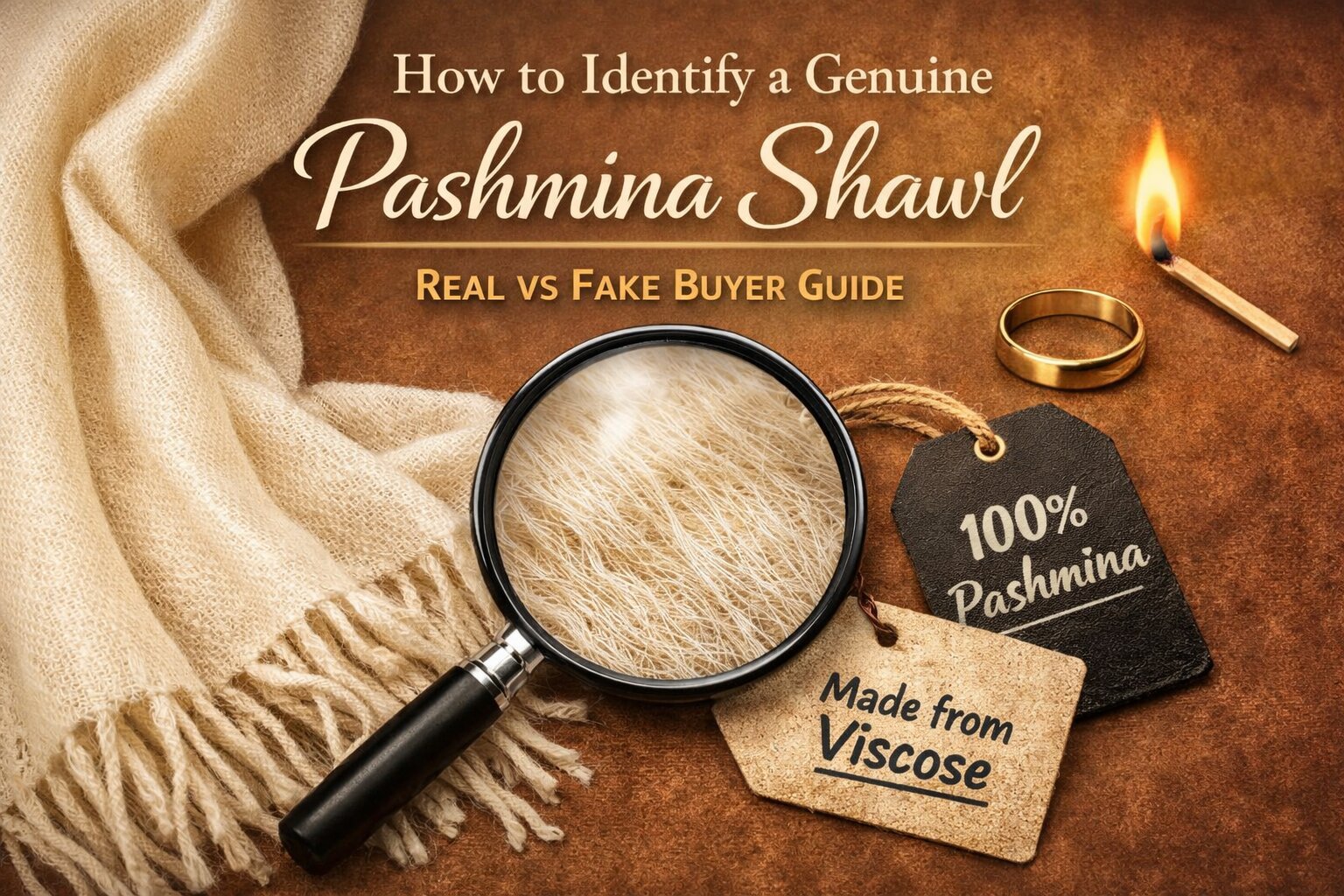
Pashmina shawls are famous for their exceptional softness, warmth, and timeless elegance. However, as demand for luxury shawls has grown worldwide, the market has also become flooded with imitation products labeled as “pashmina.”
Because of this, many buyers now ask the same question:
How to identify if the pashmina shawl I am buying is genuine?
The truth is that authentic pashmina has unique characteristics that are difficult for synthetic fabrics to imitate. By paying attention to a few key details such as fiber texture, weave quality, and product origin, you can usually distinguish real pashmina from fake alternatives.
At Rita Cashmere, we often hear from customers who want to understand the difference between genuine Himalayan pashmina and mass-produced imitations. This guide explains the practical ways experts identify authentic pashmina shawls before buying them.
Why Fake Pashmina Is So Common
Before learning how to identify genuine pashmina, it is important to understand why counterfeit products exist.
Authentic pashmina comes from the fine undercoat of Himalayan Chyangra goats, which live in extremely cold mountain environments. These goats naturally grow ultra-fine fibers that protect them from harsh winters.
However, each goat produces only a small amount of usable fiber every year. Because of this limited supply, real pashmina is rare and valuable.
Meanwhile, global demand for luxury shawls continues to increase. As a result, many manufacturers produce cheaper fabrics using viscose, acrylic, or blended fibers and label them as pashmina.
Consequently, buyers need reliable ways to verify authenticity.
What Makes Real Pashmina Unique
Authentic pashmina is considered one of the finest natural fibers in the world. The fibers typically measure around 12–16 microns, which is much finer than ordinary wool.
This fine structure creates several distinctive qualities:
- remarkable softness
- excellent warmth despite being lightweight
- natural breathability
- smooth and elegant drape
Because of these characteristics, genuine pashmina shawls are often treated as luxury textile investments rather than simple winter accessories.
6 Reliable Ways to Identify Genuine Pashmina
Although laboratory tests provide the most accurate results, you can still identify many authentic features using simple observations.
1. Feel the Texture
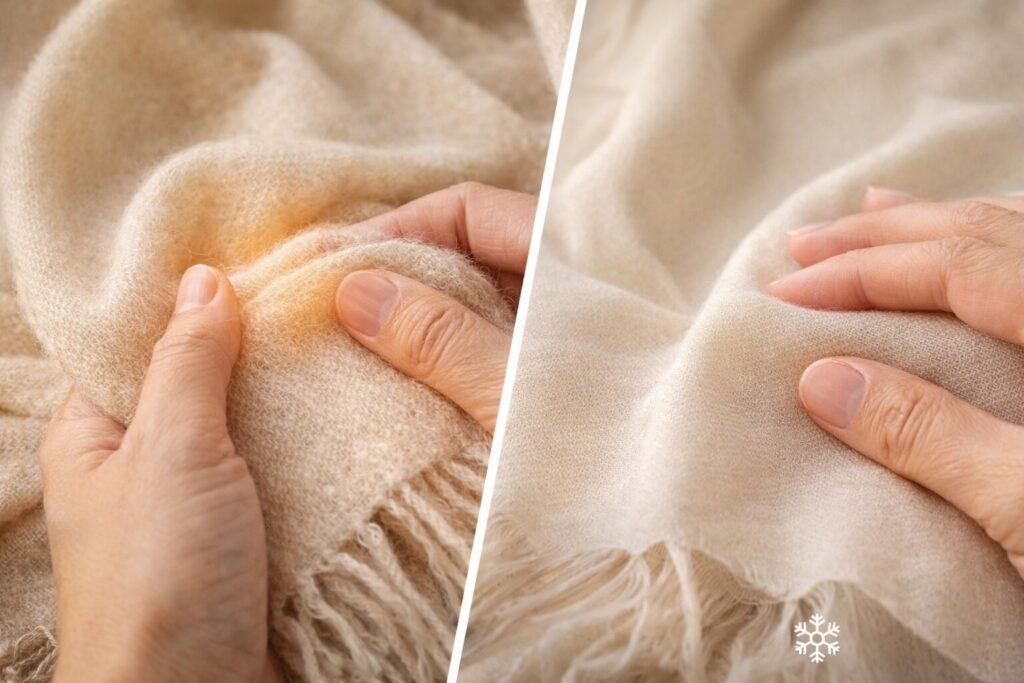
The easiest test is simply touching the fabric.
Authentic pashmina feels soft, warm, and slightly textured rather than perfectly smooth or slippery. The softness should feel natural and delicate, not artificially silky.
Another noticeable feature is warmth. When you hold genuine pashmina in your hands, it tends to warm up quickly because natural fibers trap heat efficiently.
In contrast, synthetic fabrics often feel cool and overly smooth.
2. Examine the Weave
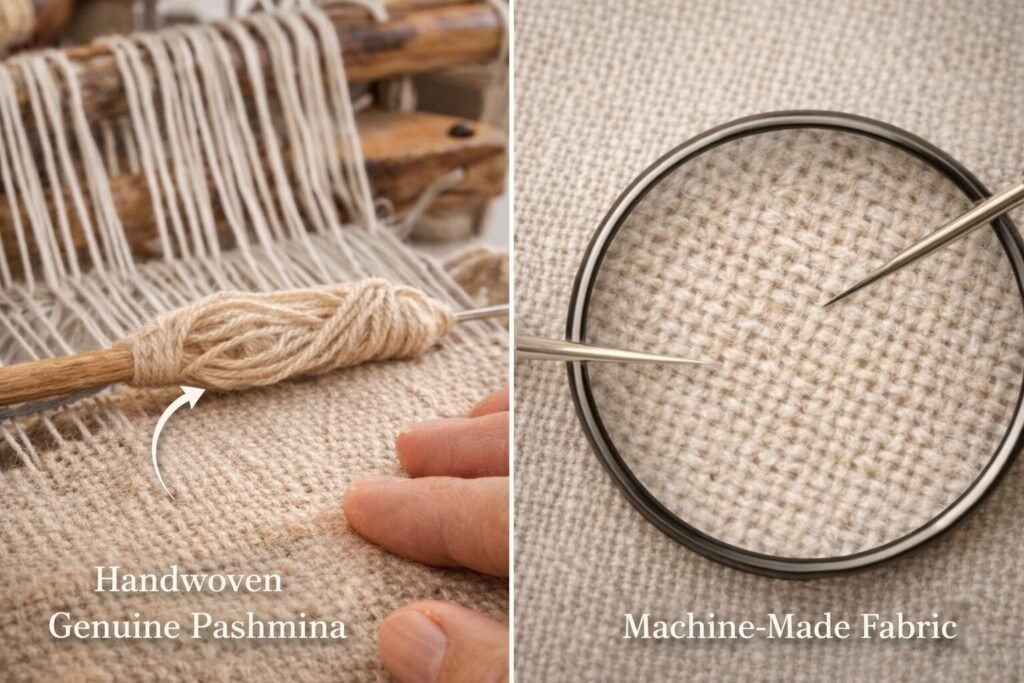
Next, take a closer look at the weave.
Many authentic pashmina shawls are handwoven using traditional looms. Because they are handmade, you may notice slight variations in the weaving pattern.
These small irregularities are actually signs of craftsmanship.
Machine-made fabrics usually look perfectly uniform, which can indicate synthetic materials or mass production.
3. Observe Natural Pilling
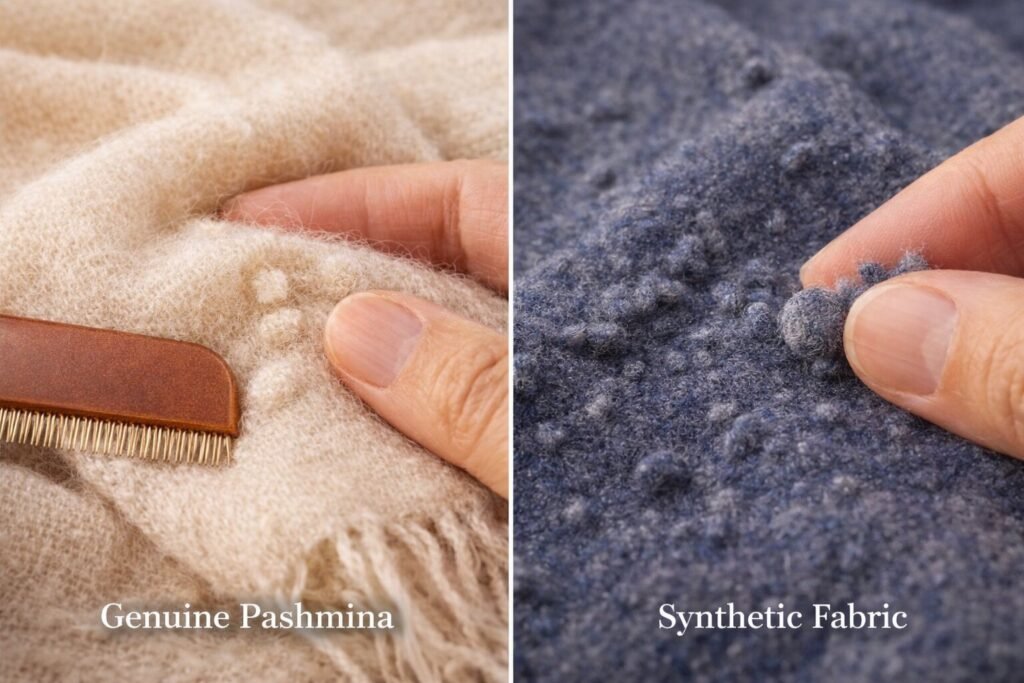
Many people assume pilling means poor quality. However, in the case of pashmina, slight pilling can be normal.
Because the fibers are extremely fine, some short fibers may rise to the surface during early use. This creates small soft pills that can easily be removed.
Synthetic materials behave differently. They either produce hard plastic-like pills or do not pill at all.
Therefore, the type of pilling can provide clues about the fiber composition.
4. Consider the Price
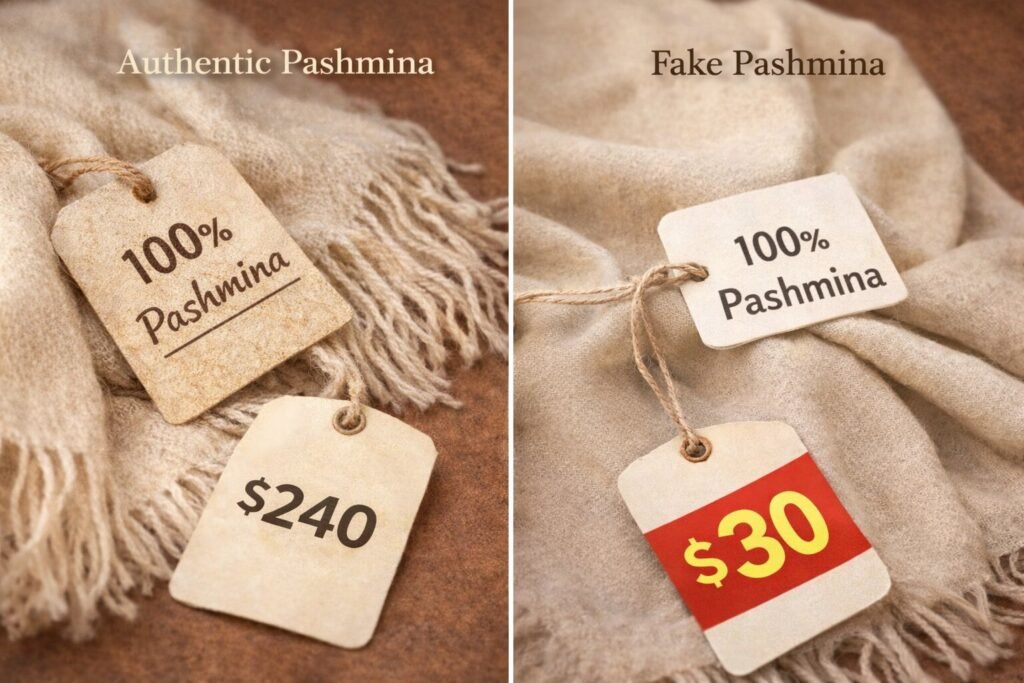
Price can also reveal important information.
Producing authentic pashmina involves several labor-intensive steps:
- collecting rare raw fiber
- cleaning and sorting the fiber
- hand spinning the yarn
- traditional weaving by skilled artisans
Because of this process, genuine pashmina shawls cannot be extremely cheap.
If a product labeled “100% pashmina” costs only $20–$50, it is very likely made from synthetic fibers or blends.
Authentic pashmina usually costs more because of the rarity of the material and the craftsmanship involved.
5. Perform a Burn Test (When Possible)
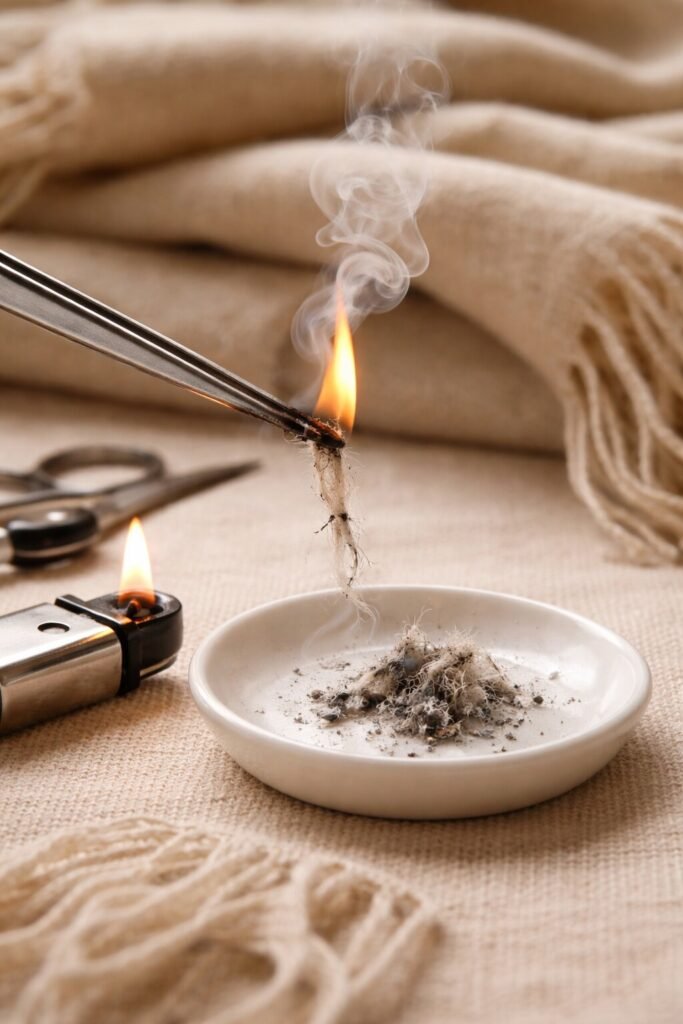
The burn test is one of the most reliable methods for identifying natural fibers.
If you burn a small loose fiber from the shawl:
Real pashmina will:
- burn slowly
- smell like burning hair
- leave soft powdery ash
Synthetic fibers behave differently. They tend to melt, smell like plastic, and form hard beads.
Because pashmina is a natural animal fiber, its reaction to heat is similar to human hair.
6. Check the Product Origin
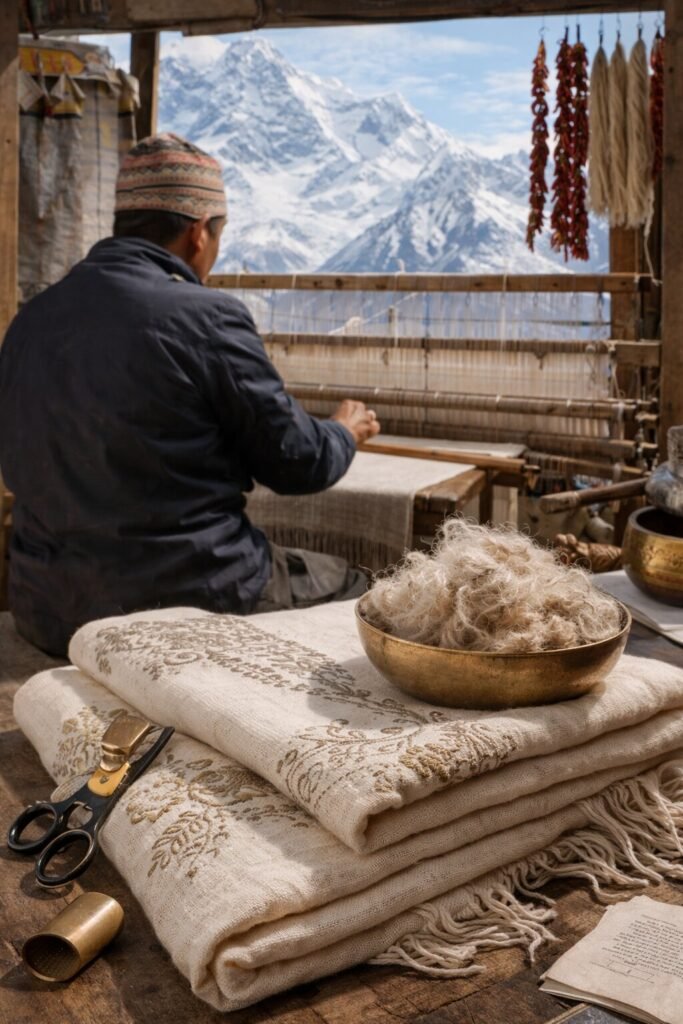
Finally, consider the source of the shawl.
Authentic pashmina typically comes from Himalayan regions such as Nepal, where Chyangra goats produce the ultra-fine fibers used in luxury shawls.
Reliable manufacturers usually provide details about:
- fiber sourcing
- traditional production methods
- artisan craftsmanship
Companies specializing in Himalayan cashmere and pashmina, such as Rita Cashmere, focus on sourcing authentic fibers and supporting traditional weaving techniques.
The Ring Test Myth
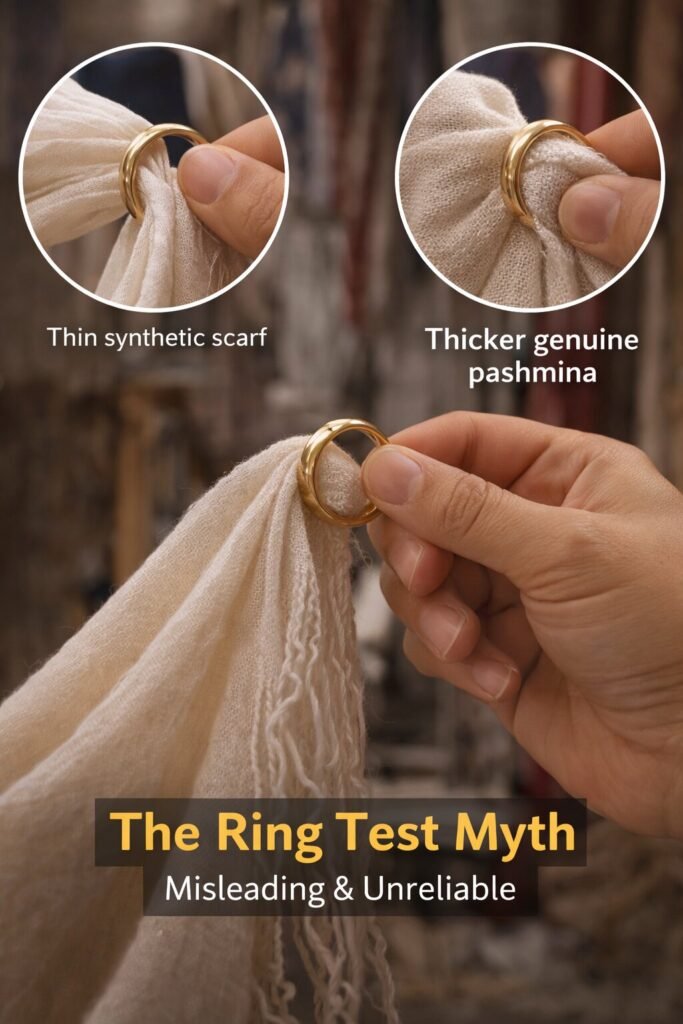
You may have seen videos showing a pashmina shawl passing through a ring. Many people believe this proves authenticity.
However, this method is misleading.
The ring test only measures fabric thinness, not fiber quality. Thin synthetic fabrics can also pass through a ring, while thicker genuine pashmina may not.
Therefore, experts generally consider the ring test an unreliable way to verify real pashmina.
Instead, it is better to focus on texture, warmth, weave, and fiber behavior.
Real Pashmina vs Fake Pashmina
| Feature | Genuine Pashmina | Fake Pashmina |
|---|---|---|
| Fiber | Natural Chyangra goat undercoat | Synthetic or blended fibers |
| Texture | Soft, warm, slightly textured | Smooth or shiny |
| Weave | Often handwoven | Machine-made |
| Warmth | Excellent insulation | Moderate warmth |
| Price | Higher due to rarity | Usually inexpensive |
Understanding these differences can help buyers avoid counterfeit products.
Common Signs of Fake Pashmina
When shopping for pashmina, watch for these warning signs:
- extremely low prices
- overly shiny or synthetic texture
- perfectly uniform machine weaving
- unclear fiber labels
- vague information about origin
If several of these signs appear together, the product is likely not genuine.
Why Authentic Pashmina Is Worth the Investment
Although authentic pashmina costs more than synthetic alternatives, its quality makes it worthwhile.
Genuine pashmina offers:
- exceptional warmth without heavy weight
- long-lasting natural fibers
- timeless elegance and softness
- durable craftsmanship
With proper care, a high-quality pashmina shawl can remain soft and beautiful for many years.
At Rita Cashmere, the focus is not only on producing luxury knitwear but also on preserving the Himalayan traditions behind authentic cashmere and pashmina textiles.
Final Thoughts
Learning how to identify a genuine pashmina shawl becomes easier once you understand the natural characteristics of the fiber.
Instead of relying on internet myths, pay attention to:
- texture and warmth
- weave structure
- natural pilling
- realistic pricing
- fiber reaction to heat
- product origin
By focusing on these factors, buyers can confidently distinguish real pashmina from imitations.
Ultimately, authentic pashmina represents more than just a luxury shawl. It reflects centuries of Himalayan craftsmanship, natural fiber heritage, and one of the finest textiles in the world.
Frequently Asked Questions
How can I tell if a pashmina shawl is genuine?
You can identify genuine pashmina by examining its softness, warmth, weave pattern, and fiber behavior. Authentic pashmina also behaves like natural hair during burn tests.
Can fake pashmina pass the ring test?
Yes, thin synthetic fabrics can pass the ring test. Therefore, this test is not a reliable way to confirm authenticity.
Why is real pashmina expensive?
Authentic pashmina is expensive because the fiber is rare and requires skilled artisans to spin and weave it using traditional techniques.
Is pashmina the same as cashmere?
Pashmina is a type of fine cashmere fiber that comes specifically from Himalayan Chyangra goats and is known for its exceptional softness and warmth.